

How does the level of automation in a water roller affect its price?
Aug 20, 2026
Yo! I'm a supplier in the water roller price game, and today we're gonna dig into how the level of automation in a water roller affects its price.
Let's start off by getting clear on what we mean by the level of automation in a water roller. You see, a water roller can range from being a super basic, hands - on manual thing to a high - tech, fully automated machine. At the low end of the automation spectrum, you've got those water rollers that need a lot of human input. Think about it: you have to manually fill it with water, move it around the area where it's needed, and then empty it when you're done. It's like driving an old - school car with a manual transmission, where you've got to do all the work yourself. These kinds of water rollers are pretty simple in design. They usually have fewer parts, and they're made with more basic materials.
For example, a manual water roller might just be a big drum - like structure with a simple valve for filling and emptying water. You rely on your own strength or maybe a small hand - operated pump to get the job done. These are great for small - scale projects, like watering a tiny backyard garden or a small play area. The price of these low - automation water rollers is generally quite affordable. Why? Well, they don't need a lot of fancy technology. The manufacturing process is straightforward, and there aren't high - cost components involved. You can pick one up for a relatively small amount of money, which makes them a popular choice for homeowners or small - time users on a budget.
Now, let's move up the automation ladder. As we increase the level of automation in water rollers, we start to see some changes. Semi - automated water rollers are a step up from the manual ones. These machines can do some tasks on their own, but they still need a bit of human intervention. For instance, they might have an automatic filling system. You just connect the water source, and the roller fills itself up to a certain level. But you still have to move it around and empty it manually.
These semi - automated water rollers often come with more advanced features like sensors to control the water level during filling. They're also made with better - quality materials to handle the additional functions. The manufacturing process is a bit more complex, as engineers need to integrate the automatic filling mechanism with the rest of the roller's structure. This complexity and the use of better materials drive up the price. They're suitable for medium - sized projects, like small sports fields or community parks.
When we talk about fully automated water rollers, we're entering a whole new ballgame. These are the high - end machines that can do almost everything on their own. They have built - in GPS systems to move around the area autonomously, and they can adjust the amount of water they dispense based on the ground conditions. Some fully automated water rollers can even detect when they're running low on water and return to a filling station to refill themselves.

The technology involved in these rollers is cutting - edge. They use advanced microcontrollers, sensors, and actuators to perform all these functions. The materials used are of the highest quality to ensure durability and reliability. The manufacturing process is extremely complex, requiring a lot of research and development. All these factors contribute to a significantly higher price tag. Fully automated water rollers are typically used for large - scale commercial projects, like professional sports stadiums or large agricultural fields.
Another aspect to consider is the cost of maintenance. Low - automation water rollers are easy to maintain. Since they have fewer parts and simpler designs, you don't need a lot of technical knowledge to fix them if something goes wrong. You can usually find replacement parts at a low cost, and basic maintenance tasks can be done by the user themselves.
In contrast, high - automation water rollers require specialized maintenance. The complex technology and advanced components mean that you often need trained technicians to service them. Replacement parts can be expensive, and the cost of regular maintenance can add up over time. This additional cost is also factored into the initial price of the fully automated water rollers.
Let's talk about the market demand. There's a high demand for low - cost, low - automation water rollers. A lot of people and small businesses are looking for an affordable way to water their areas. This high demand and the relatively simple production process keep the prices competitive. On the other hand, the market for high - end, fully automated water rollers is smaller. There are fewer buyers, mainly large corporations and institutions. But these buyers are willing to pay a premium for the advanced features and the efficiency that these machines offer.
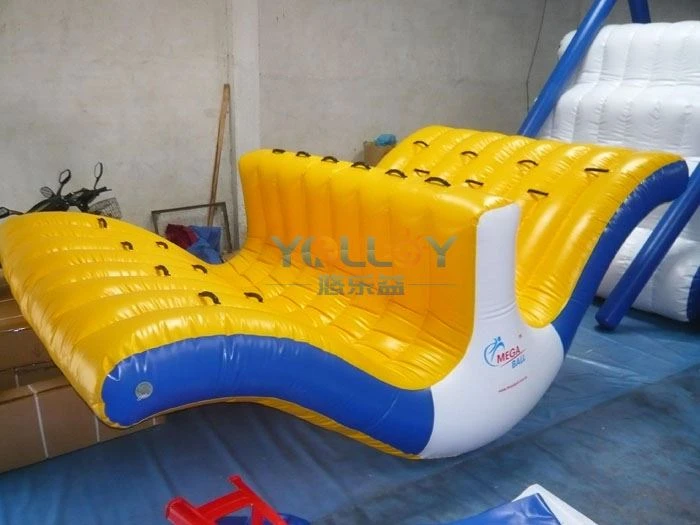
Now, I want to mention some of the other cool water products we have. Check out our inflatable see saw style water totter, which is a great addition to any water area. Also, our Inflatable Seesaw Floater is super fun for the whole family. And if you're into more adventurous water rides, take a look at our Inflatable Towable Ringo Tube. For a real blast, the Inflatable Slide Blob Launch Water Jungle Joe is the way to go, and the Inflatable Water Toys Fly Fish Tube For 6 People can accommodate a group of friends.
So, if you're in the market for a water roller or any of these other amazing water products, don't hesitate to reach out. Whether you need a simple, low - cost manual water roller for your backyard or a high - tech, fully automated one for a large commercial project, we've got you covered. We can discuss your specific needs and work out the best solution for you. Let's have a conversation about how we can meet your water - related requirements and get you the perfect product at a fair price.
References:
- General knowledge of water roller manufacturing and technology
- Industry reports on water roller market trends