

How do I handle a water roller on uneven ground?
Aug 02, 2026
Handling a water roller on uneven ground is a task that requires a blend of knowledge, skill, and the right equipment. As a supplier of water rollers, I've witnessed firsthand the challenges and the rewards associated with navigating these unique inflatables across less - than - perfect terrains. In this article, I will share some insights and strategies on how to effectively handle a water roller on uneven ground.
Understanding the Water Roller
Before delving into the techniques of handling a water roller on uneven ground, it's essential to understand what a water roller is and how it functions. A water roller, also known as an inflatable water walking ball or tube, is a large, transparent, inflatable sphere that allows people to walk or roll on water. It's a popular amusement item in water parks, beaches, and private pools. The inflatable structure is typically made of durable PVC or TPU materials, which provide buoyancy and protection.
Water rollers come in various sizes and designs, catering to different age groups and user preferences. Some may have additional features like handles or air vents for better control and comfort. The basic principle behind a water roller is that it traps a layer of air inside, allowing it to float on water and enabling users to move around by shifting their weight.
Challenges of Uneven Ground
When it comes to using a water roller on uneven ground, several challenges arise. Uneven ground can include surfaces with bumps, holes, slopes, or debris. These irregularities can pose risks to the integrity of the water roller and the safety of the user.
One of the primary challenges is the potential for punctures. The sharp edges of rocks, sticks, or other debris on uneven ground can easily pierce the inflatable material of the water roller. Even small punctures can lead to air leakage, reducing the buoyancy and performance of the water roller.
Another issue is the difficulty in maintaining balance. Uneven ground makes it hard for the water roller to roll smoothly. The constant changes in elevation can cause the roller to tilt or tip over, increasing the risk of injury to the user. Moreover, the uneven surface can create additional friction, making it more strenuous to move the water roller forward.
Pre - handling Preparations
To handle a water roller on uneven ground safely and effectively, proper preparations are crucial.
Inspection
Before using the water roller, conduct a thorough inspection of the inflatable. Check for any signs of damage, such as cracks, tears, or weak spots in the material. Pay special attention to the seams, as they are often the most vulnerable areas. If you find any damage, repair it immediately using a suitable repair kit.
Surface Assessment
Inspect the uneven ground where you plan to use the water roller. Remove any sharp objects, large rocks, or debris that could potentially puncture the inflatable. If possible, mark out any significant bumps, holes, or slopes so that you can be aware of them during use.
Inflation
Ensure that the water roller is properly inflated. Over - inflation can make the roller more rigid and less flexible, increasing the risk of damage on uneven ground. Under - inflation, on the other hand, can reduce the buoyancy and make it difficult to move. Follow the manufacturer's guidelines for the recommended inflation level.
Handling Techniques
Once you've completed the pre - handling preparations, it's time to learn the proper handling techniques for using a water roller on uneven ground.

Slow and Steady Movement
When starting to move the water roller on uneven ground, begin with slow and steady movements. This allows you to get a feel for the surface and adjust your balance accordingly. Rapid movements can cause the roller to lose stability and tip over.
Weight Distribution
Proper weight distribution is key to maintaining balance on uneven ground. Shift your weight gradually as you move over bumps or slopes. When going uphill, lean forward slightly to keep the center of gravity in front of the roller. When going downhill, lean back to prevent the roller from rolling too quickly.
Steering
Steering a water roller on uneven ground can be more challenging than on a flat surface. Use your hands and feet to gently push against the inner walls of the roller to change direction. Be patient and make small adjustments, as sudden steering movements can cause the roller to become unstable.
Teamwork
If you're using a larger water roller that can accommodate multiple people, teamwork is essential. Communicate with your fellow riders to coordinate your movements. For example, when approaching a steep slope, everyone should lean in the same direction to maintain balance.
Safety Considerations
Safety should always be the top priority when handling a water roller on uneven ground.
Protective Gear
Wear appropriate protective gear, such as helmets, knee pads, and elbow pads. This can help reduce the risk of injury in case of a fall or collision.
Supervision
If children are using the water roller, ensure that they are supervised by a responsible adult at all times. Adults should be familiar with the handling techniques and safety procedures.
Emergency Plan
Have an emergency plan in place. Know how to quickly deflate the water roller in case of an emergency, such as a puncture or a user getting stuck. Keep a first - aid kit nearby in case of minor injuries.
Our Product Range
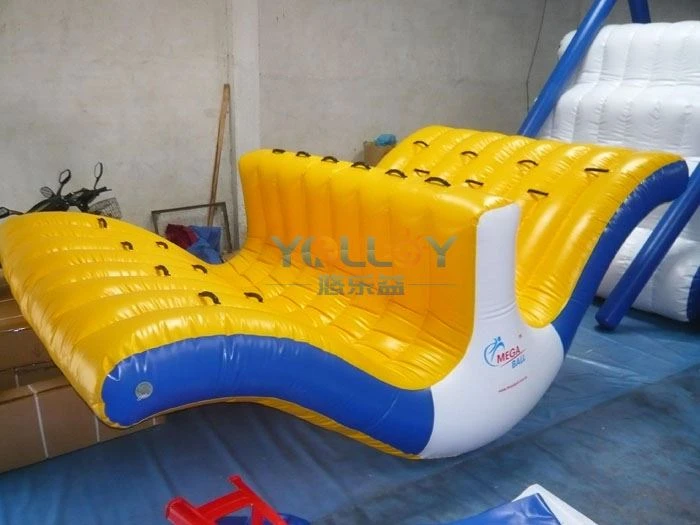
As a water roller supplier, we offer a wide range of high - quality inflatable water toys in addition to water rollers. Our product line includes inflatable water wheel, inflatable see saw style water totter, 6 Person Inflatable Floating Water Island With Shade, Twister inflatable Towable boat, and Inflatable Cable Floats Hose Floats. All our products are made from premium materials and are designed to provide maximum durability and fun.
Contact for Purchase
If you're interested in purchasing our water rollers or any other inflatable water toys, we welcome you to contact us for further discussions. We can provide detailed product information, pricing, and shipping options. Whether you're a water park owner, a beach resort manager, or an individual looking for a fun water toy, we have the right solution for you.
References
- Smith, J. (2018). The Science of Inflatable Toys. Journal of Recreational Equipment.
- Brown, A. (2020). Safety Guidelines for Water Amusement Devices. International Journal of Water Safety.
- Green, C. (2019). Handling Inflatable Structures on Different Terrains. Engineering and Recreation Journal.